Friday, March 31, 2006


Thursday, March 30, 2006
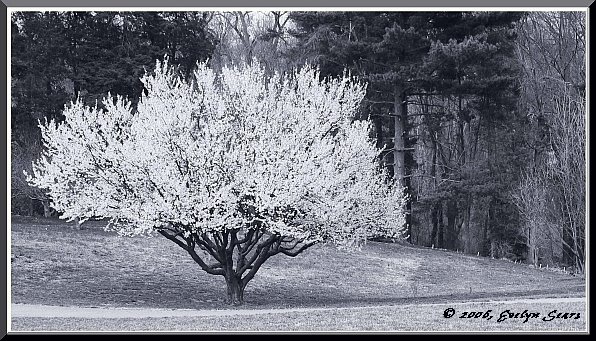
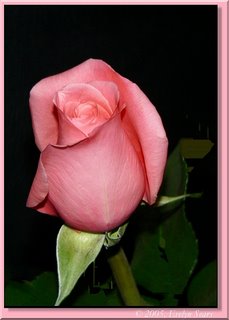
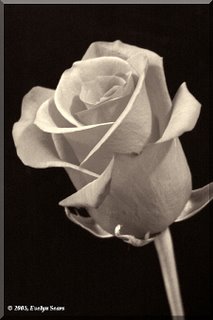
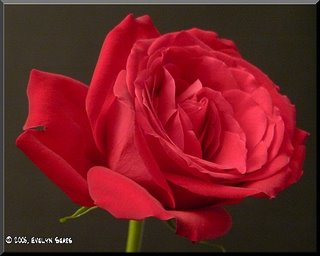
Some Flowers for Spring!
Well, I think spring has really arrived now. The trees are budding, the flowers are poking through the ground, the grass is growing - and allergies are kicking in!
I love the springtime. I love the longer days and the opportunities to get outdoors more. I've started taking lunchtime walks in the park next door to my workplace and I'm making plans for hiking/biking outings that I can do over the next few weekends.
Which reminds me - I've got to get my bike into the shop to get it tuned up. I love the lifetime service agreement. I get the bike tuned up free of charge every year and as many times in between as I need it. Need a tire changed? Buy a tire at one end of the store, take it to the service department, and ride away a few minutes later without paying any labor/service fees!
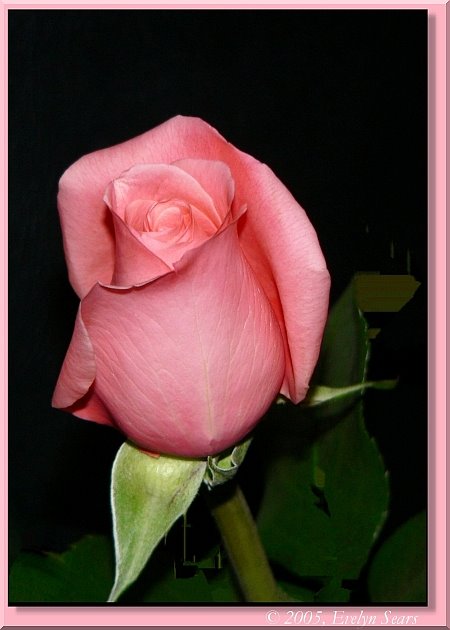
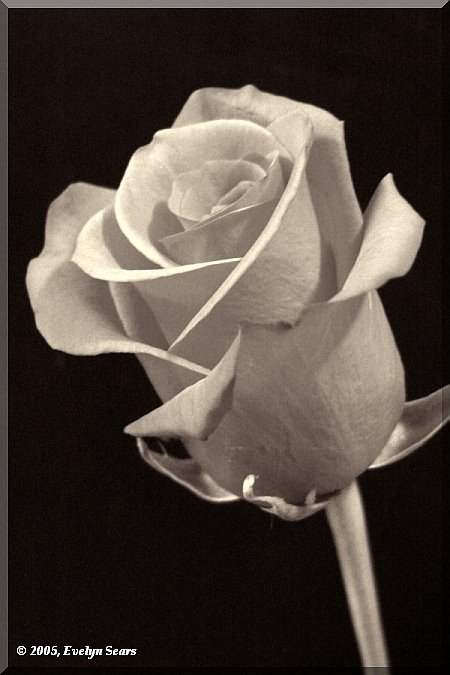
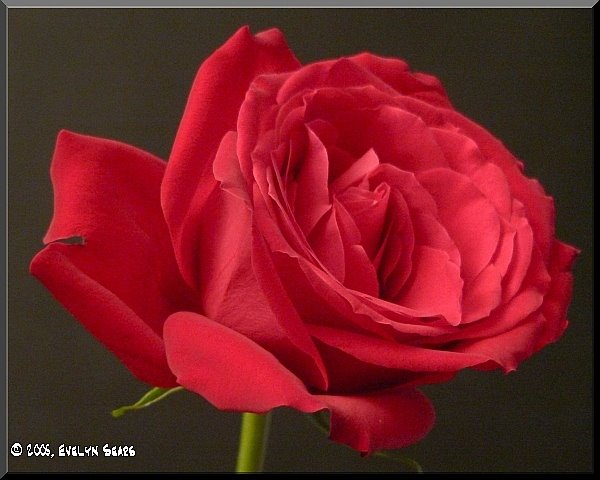
Anyway, since I don't have any new springtime photos to share right now (I'll have to do something about that!), I'll share some oldies. I hope you like them.
I love the springtime. I love the longer days and the opportunities to get outdoors more. I've started taking lunchtime walks in the park next door to my workplace and I'm making plans for hiking/biking outings that I can do over the next few weekends.
Which reminds me - I've got to get my bike into the shop to get it tuned up. I love the lifetime service agreement. I get the bike tuned up free of charge every year and as many times in between as I need it. Need a tire changed? Buy a tire at one end of the store, take it to the service department, and ride away a few minutes later without paying any labor/service fees!
Anyway, since I don't have any new springtime photos to share right now (I'll have to do something about that!), I'll share some oldies. I hope you like them.
Wednesday, March 29, 2006

Sunday, March 26, 2006
GREAT FALLS NATIONAL PARK
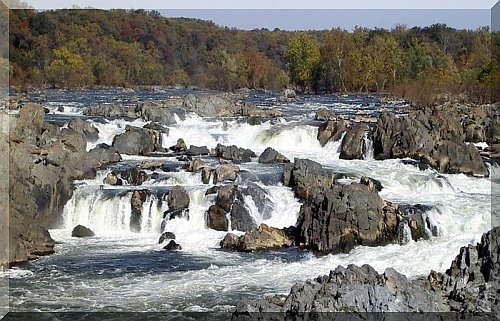
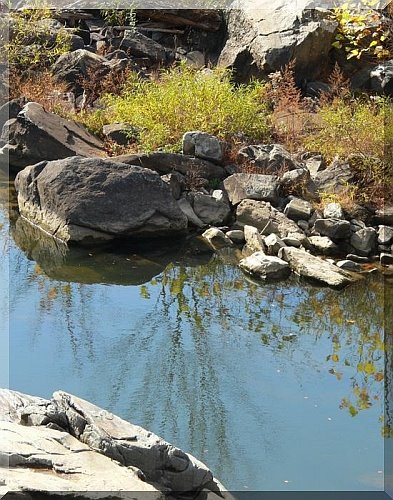
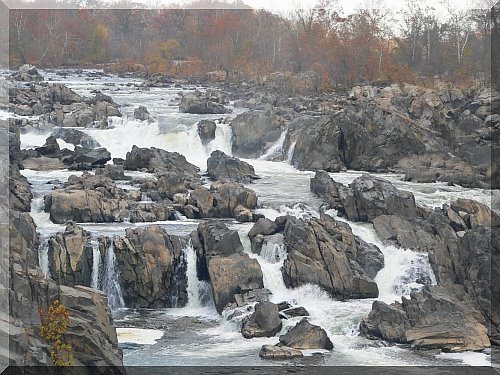
About 15 miles northwest of Washington, DC the Potomac River drops 75 feet over a series of breath-taking falls. The park has entrances, trails and overlooks in both Maryland and Virginia. The photos shown here were taken from both sides of the park.
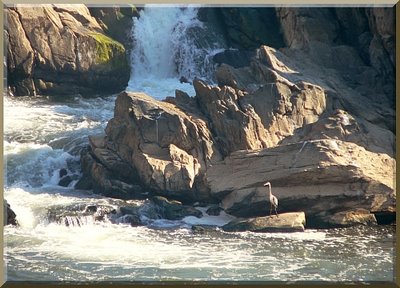
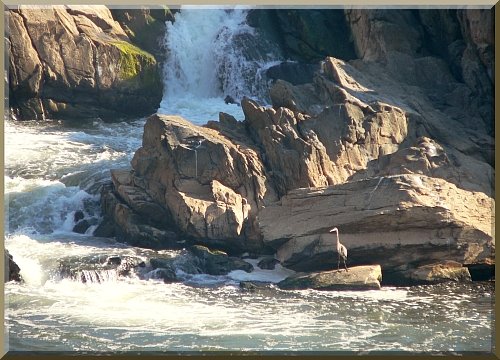
The park offers wonderful hiking, mountain biking and equestrian trails. It's also a great place to watch hawks, eagles and herons. The C&O canal towpath cuts through the park in Maryland and Fairfax County's Riverbend Park adjoins the park in Virginia. A $5 fee gets you unlimited admission into both sections of the park for three days. It's a great place for a picnic lunch and enjoyment of the beautiful outdoors. This park is Washington DC's best kept secret!
Photos: © 2005 by Evelyn Sears
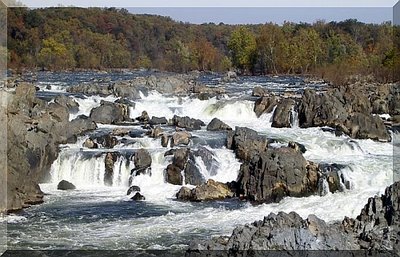
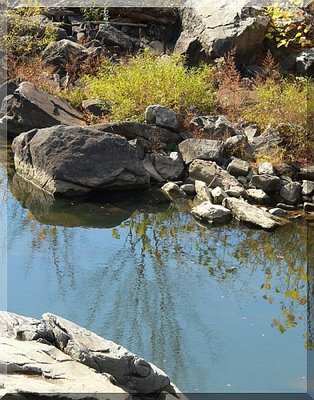
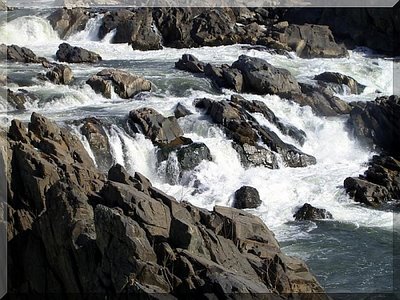
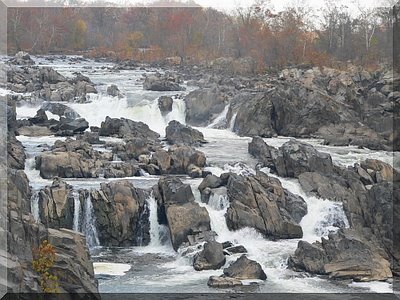
About 15 miles northwest of Washington, DC the Potomac River drops 75 feet over a series of breath-taking falls. The park has entrances, trails and overlooks in both Maryland and Virginia. The photos shown here were taken from both sides of the park.
The park offers wonderful hiking, mountain biking and equestrian trails. It's also a great place to watch hawks, eagles and herons. The C&O canal towpath cuts through the park in Maryland and Fairfax County's Riverbend Park adjoins the park in Virginia. A $5 fee gets you unlimited admission into both sections of the park for three days. It's a great place for a picnic lunch and enjoyment of the beautiful outdoors. This park is Washington DC's best kept secret!
Photos: © 2005 by Evelyn Sears

Thursday, March 23, 2006
A Walking Tour of Washington DC
A couple of months ago I treated myself to a walking tour of Washington, DC. The tour began in the observation tower of the Old Post Office Building.
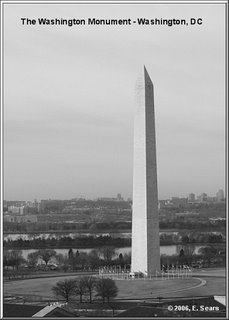
The OPOB has the second highest observation point in the city. The city has a law that no structure may be taller than the Washington Monument, so the OPOB is the best place within DC, except for the WM, from which to view the city. If one goes across the Potomac River there are several more nice places that overlook the city.
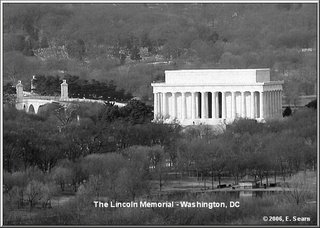
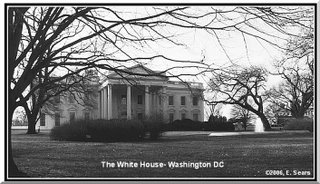
After descending from the tower, I wandered over to 1600 Pennsylvania Avenue.
By this time I was getting hungry, so I met Dave at his office and we had a nice leisurely lunch. After lunch, I went back to the National Mall.
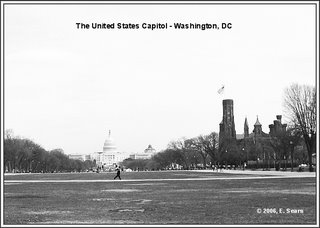
After walking around some more I realized that my feet were sore and blistered. I took one final look around and called it a day well-spent.
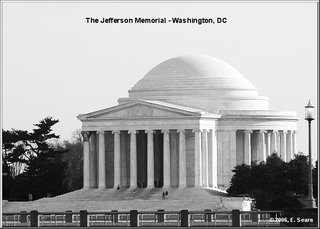
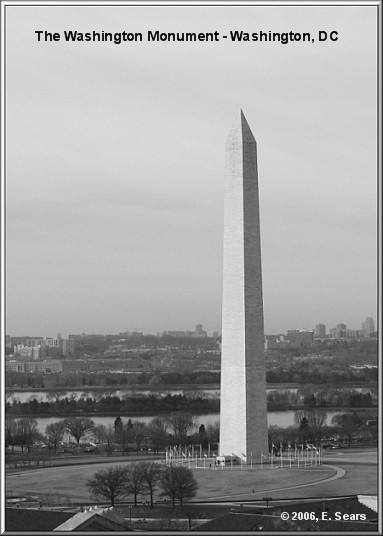
The OPOB has the second highest observation point in the city. The city has a law that no structure may be taller than the Washington Monument, so the OPOB is the best place within DC, except for the WM, from which to view the city. If one goes across the Potomac River there are several more nice places that overlook the city.

After descending from the tower, I wandered over to 1600 Pennsylvania Avenue.
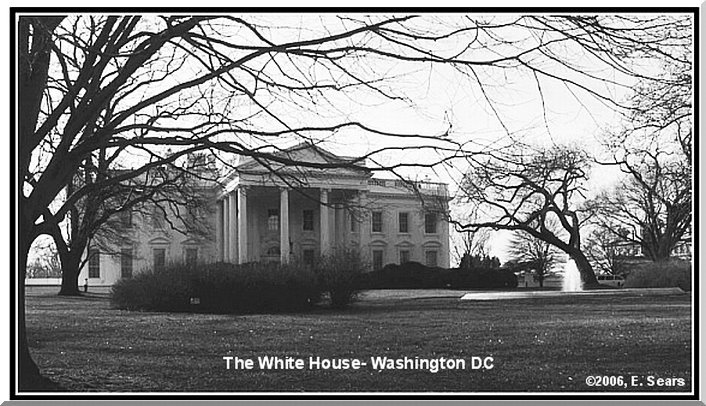
By this time I was getting hungry, so I met Dave at his office and we had a nice leisurely lunch. After lunch, I went back to the National Mall.
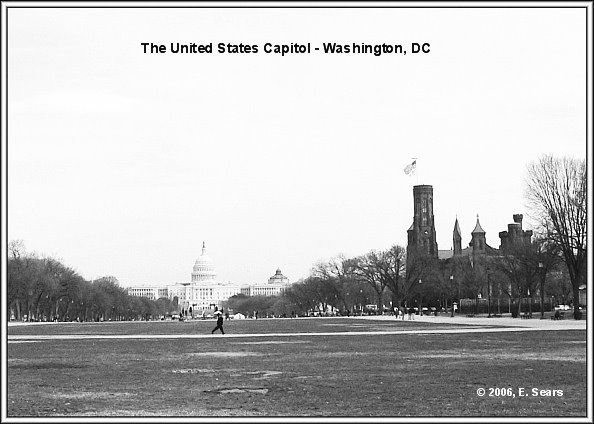
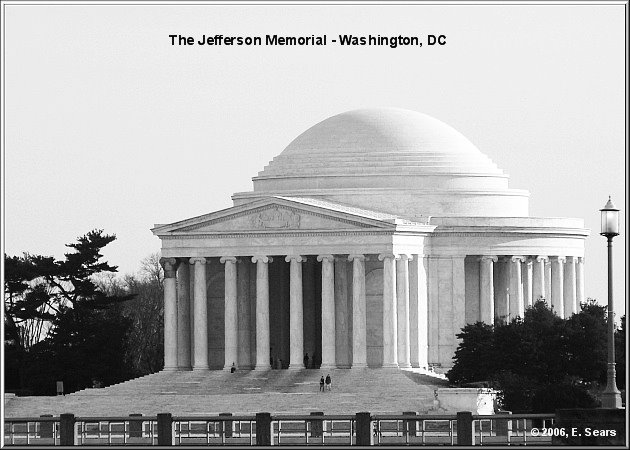
After walking around some more I realized that my feet were sore and blistered. I took one final look around and called it a day well-spent.
Wednesday, March 22, 2006
THOUGHTS ON LIFE IN “THE MOST POWERFUL CITY IN THE WORLD”
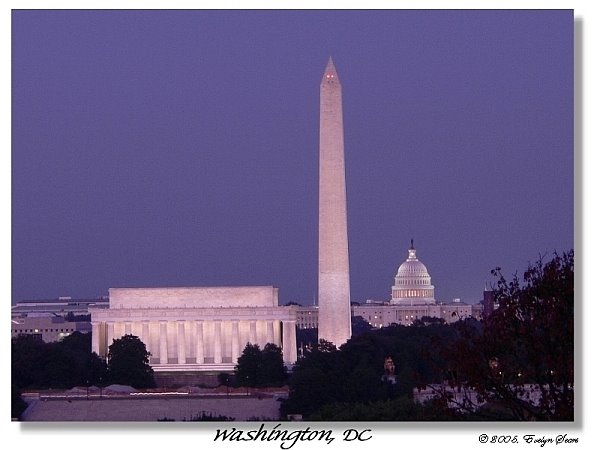
So, what’s it like living in "the most powerful city in the world?"
Well, except for when it gets too exciting (9/11; Anthrax Attacks; Hurricane Isabel; Sniper Stalkings), it’s pretty mundane – probably like most other major metropolitan areas in the USA. Nevertheless, there are many good things about living in Washington, DC.
For one thing, there is an incredible sense of history. There are statues, monuments and historical markers everywhere. Seriously! Dave and I were walking home from a neighborhood restaurant one night and we passed a Civil War marker in a motel parking lot!
Another cool thing is that many of the great museums are free of charge. You may have to pay through the nose for parking , but you won’t have to pay to get into the museums. Example: Air & Space Museum at Dulles - admission = free, parking = $12.
Another nice feature is the abundance of major league sports:
* NHL: Washington Capitals
* NFL: Washington Redskins
* MLB: Washington Nationals
* WNBA: Washington Mystics
* NBA: Washington Wizards
* MLS: DC United.
Moving on – if you like collegiate sports, we have Georgetown University, George Washington University, George Mason University, the University of Maryland (finally, someone whose name is not George), Howard University. . . . And a quarterfinal round (better known as the Sweet Sixteen) of the Men’s NCAA basketball tournament will be held right here this weekend! Moreover, two of the local schools – Georgetown and George Mason – are still in the tournament.
Continuing – if you like the arts, we have The Kennedy Center, The Washington National Opera, The President’s Own (Marine Band), Pershing’s Own (Army Band), the Navy Band (I guess they don’t belong to anybody, or maybe they belong to everybody), the National Symphony Orchestra, several great jazz clubs. . . . Another cool thing: throughout the summer the military bands give free outdoor concerts every week. It’s pretty nice to sit at the foot of the Washington Monument (or another well-known landmark) and listen to great music.
Finally – family members actually come to visit us now! We lived in Manitoba for seven years and almost nobody came to visit! Hats off to my mom, though, she came in December! We lived in Iowa for five years and almost nobody came to visit. Hats off to Mom again - she survived a tornado when she came! Since moving to Washington, however, we’ve seen siblings, nephews and nieces, and, of course, parents. I guess we’re finally living in a place that they figure is interesting. They do the tourist thing by day, then, at night, when they’re too tired to walk any more, they eat and sleep with us.
So, what’s it like living in “the most powerful city in the world?” Well, it's actually pretty good.
Tuesday, March 21, 2006

Sunday, March 19, 2006
ON JUSTICE (AND A PROVOCATIVE NOVEL)
I know this book is a novel, not a philosophical treatise. Nevertheless, it is being marketed and critiqued as a "thinking person's" mystery. Moreover, the author is a law professor at a prestigious university. One cannot help believing that the philosophical references and speculations littered throughout the book are meant to be taken with some seriousness. That being the case, the heroine's refusal to acknowledge the frequently public nature of morality and her corresponding refusal to acknowledge the importance of accountability for the consequences (not just the intentions) of behavior make this book a tremendous disappointment. On the other hand, if the book's outrageous conclusion is intended merely to stimulate thoughtful response, then it is a resounding success.
Friday, March 17, 2006


Thursday, March 16, 2006
THE BRICK
Well, I spent some time last night and this morning trying to figure out what to write about next. And out of the blue, I'm sitting at my desk when an email message pops up! As soon as I read it, I thought, "That's what I should share today." I wish I knew who the author was so that I could give appropriate credit. I wish I could claim credit for writing it myself! But I did not write it and I don't know who did. If anyone does know who wrote it, please tell me and I will add the information. Until then, give some thought to the following story:
A young and successful executive was traveling down a neighborhood street, going a bit too fast in his new Jaguar. He was watching for kids darting out from between parked cars and slowed down when he thought he saw something. As his car passed, no children appeared. Instead, a brick smashed into the Jag's side door! He slammed on the brakes and backed the Jag back to the spot where the brick had been thrown. The angry driver then jumped out of the car, grabbed the nearest kid and pushed him up against a parked car shouting, "What was that all about and who are you? Just what the heck are you doing? That's a new car and that brick you threw is going to cost a lot of money. Why did you do it?" The young boy was apologetic. "Please, mister...please, I'm sorry but I didn't know what else to do," He pleaded. "I threw the brick because no one else would stop..." With tears dripping down his face and off his chin, the youth pointed to a spot just around a parked car. "It's my brother," he said. "He rolled off the curb and fell out of his wheelchair and I can't lift him up."
Well, I spent some time last night and this morning trying to figure out what to write about next. And out of the blue, I'm sitting at my desk when an email message pops up! As soon as I read it, I thought, "That's what I should share today." I wish I knew who the author was so that I could give appropriate credit. I wish I could claim credit for writing it myself! But I did not write it and I don't know who did. If anyone does know who wrote it, please tell me and I will add the information. Until then, give some thought to the following story:
A young and successful executive was traveling down a neighborhood street, going a bit too fast in his new Jaguar. He was watching for kids darting out from between parked cars and slowed down when he thought he saw something. As his car passed, no children appeared. Instead, a brick smashed into the Jag's side door! He slammed on the brakes and backed the Jag back to the spot where the brick had been thrown. The angry driver then jumped out of the car, grabbed the nearest kid and pushed him up against a parked car shouting, "What was that all about and who are you? Just what the heck are you doing? That's a new car and that brick you threw is going to cost a lot of money. Why did you do it?" The young boy was apologetic. "Please, mister...please, I'm sorry but I didn't know what else to do," He pleaded. "I threw the brick because no one else would stop..." With tears dripping down his face and off his chin, the youth pointed to a spot just around a parked car. "It's my brother," he said. "He rolled off the curb and fell out of his wheelchair and I can't lift him up."
Now sobbing, the boy asked the stunned executive, "Would you please help me get him back into his wheelchair? He's hurt and he's too heavy for me."
Moved beyond words, the driver tried to swallow the rapidly swelling lump in his throat. He hurriedly lifted the handicapped boy back into the wheelchair, then took out a linen handkerchief and dabbed at the fresh scrapes and cuts. A quick look told him everything was going to be okay. "Thank you and may God bless you," the grateful child told the stranger. Too shook up for words, the man simply watched the boy push his wheelchair-bound brother down the sidewalk toward their home.
It was a long, slow walk back to the Jaguar. The damage was very noticeable, but the driver never bothered to repair the dented side door. He kept the dent there to remind him of this message: "Don't go through life so fast that someone has to throw a brick at you to get your attention!" God whispers in our souls and speaks to our hearts. Sometimes when we don't have time to listen, He has to throw a brick at us. It's our choice to listen or not.
Monday, March 13, 2006
 MUSIC (AND ARTS) EDUCATION
Sunday, March 12, 2006
Saturday, March 11, 2006
 WINTER VACATION
Last year I took a winter vacation for the first time ever. Actually, it was just a weekend trip to Florida. I enjoyed it so much, however, that I decided a winter vacation should be included on my calendar every year. So, this year, while Dave attended a conference, I took a week’s vacation. I definitely got the better deal!
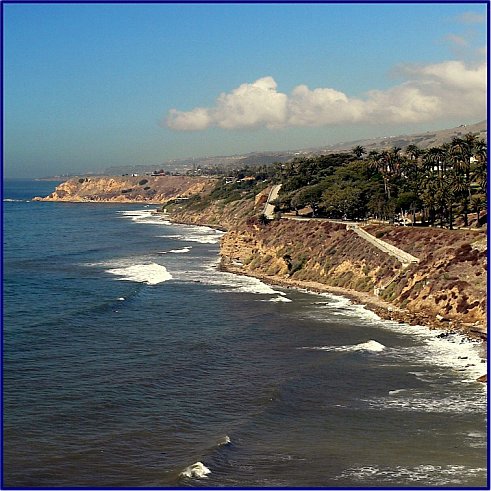
While Dave sat in endless meetings, I explored the town of San Pedro. One of the town’s main attractions is Pt. Fermin Park, complete with a beautiful lighthouse, which stands atop a cliff overlooking the Pacific Ocean. From this point one can also view Catalina Island, which lies about 22 miles away.
From Pt. Fermin, I observed a variety of interesting sights: sailboats, super-tankers, even a surfer (completely encased in a wetsuit)! I’m sure these are ordinary sights for the folks who live in San Pedro. They probably hardly ever notice such things anymore. For me, however, these sights were new, fascinating and far from ordinary.
The beauty of taking a winter vacation is the opportunity it provides to break away from routine pursuits and experience the world anew. For one week, I escaped metropolitan gridlock, mounds of paperwork, and endless phone calls. Instead, I enjoyed leisure time, ocean vistas and long quiet walks. I soaked up new sights and sounds and came home greatly refreshed. What would really make this experience worthwhile, however, is if I can bring that same sense of curiosity, wonder and adventure to my everyday life. My winter vacation will have been truly worthwhile if I can learn to experience my everyday world with fresh eyes and ears and thereby embrace its unique beauty.
Photo: The gorgeous California coastline as viewed from Pt. Fermin, San Pedro, California. © 2006, Evelyn Sears

Subscribe to:
Posts (Atom)