Monday, October 30, 2006

Photo Challenge #1 - Pumpkins

A couple of weeks ago, my sister-in-law, Barbara, started a photo challenge. This month's theme was pumpkins. My entry is shown below. I've waited all month for this event so that I could take the photos today and post this collage.

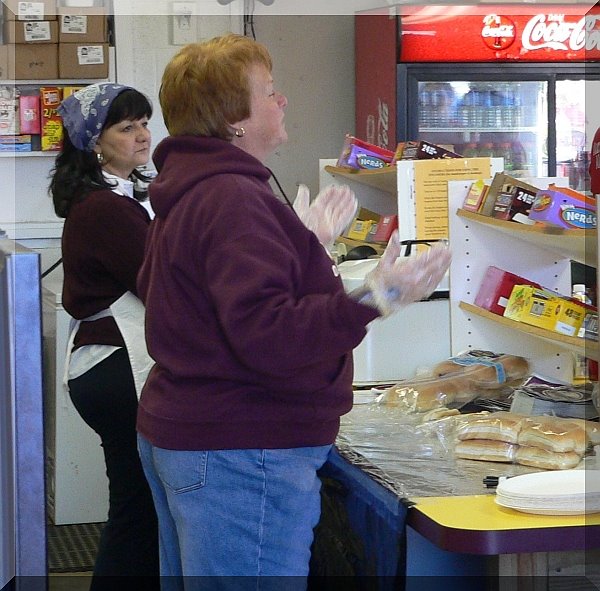
Every halloween the guys at our ARC have a pumpkin carving contest. As you can see from the photos shown here, some of their creations are impressive. If you were a judge, which one would be your winner?

Sunday, October 29, 2006

Congratulations Oakton Marching Cougars!

If you've read Dave's post from earlier this evening, you know that Joshua's marching band got a superior rating at the state competition yesterday. After the competition, the trombone section went out for supper at a relatively local restaurant. Since Joshua needed a ride anyway, he went ahead and volunteered Dave and me to drive two other kids, in addition to him, to and from the meal.

When we got to the restaurant, we discovered that Joshua's group had to wait about 1/2 hour to get a table. Since Dave and I only needed a table for two, we were seated right away. Joshua's group was just getting seated as we were paying our bill. We browsed around Best Buy for awhile, then sat in the car and listened to the radio until the kids decided they were ready to go home - around 10:00 or so. I'm glad last night was the night to turn the clocks back an hour (my favorite night of the year, by far!).

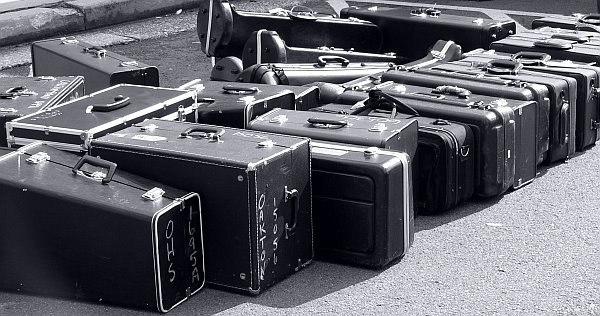
On to the photos. First - instruments waiting to be loaded onto one of the trucks. We used two moving trucks to transport instruments, plus several SUVs, pickups, etc., to haul the scoreboard, dugouts and other props, including golf carts and tractors to tow things onto and away from the field.


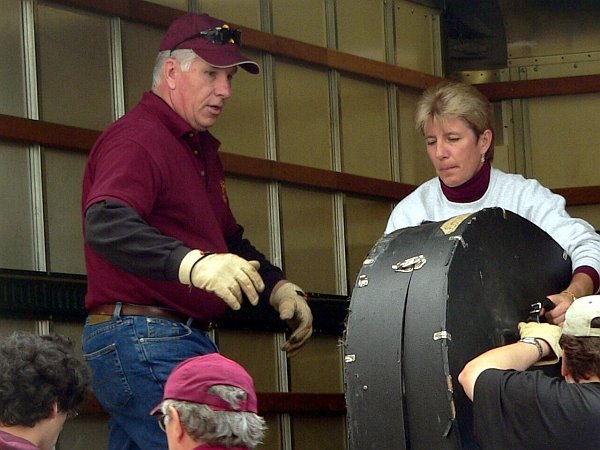
Second, instruments actually being loaded onto a truck. As you can see, Oakton parents believe in equal opportunity for all - none of this, "the men will get the big stuff (i.e, sousaphones) and the ladies will get the little things (i.e., piccolos)" garbage.

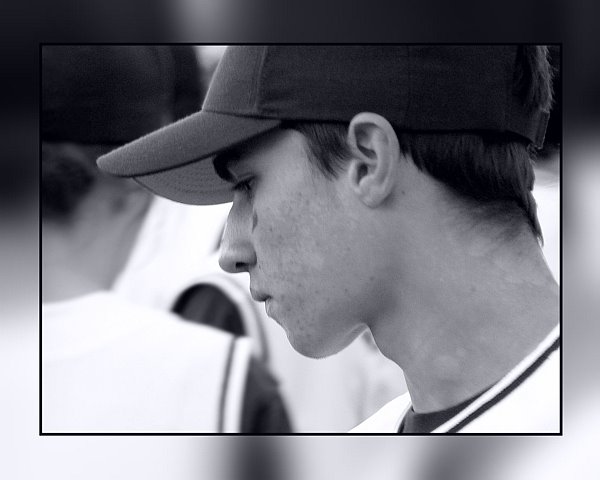
Joshua before last week's show. The sun was setting as they were preparing for the show. It was fully dark by the time they performed.

Joshua after last night's show. It was not dark yet, but storm clouds were coming in fast.

Thursday, October 26, 2006

Brass Band: Washington Post March

I came across this cute video on YouTube today. LOL!

Brass Band

Monday, October 23, 2006

Fall Has Arrived

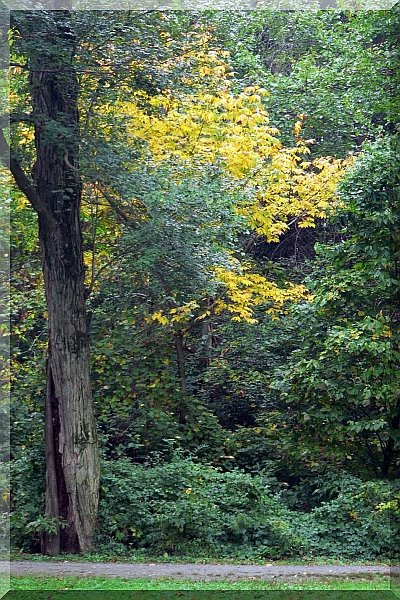
Fall has arrived in northern Virginia. The air is chilly - a bit lower than seasonal norms, actually - and the leaves are changing colors and falling. Fall is weird in more southerly climates. Different sets of trees change colors at different times, so it's hard to see grand vistas of riotous color. Moreover, the colors in New England and Ontario are incredibly vibrant compared to what we see in these parts. One has to go high up into Blue Ridge Mountains to see colors that compare with those in the north. Nevertheless, determined to get some photographic record of the fall of 2006, I took my camera to the park on my breaks today. The best photos I got, by far, were of the reflections in the water. These are a few of them. As you can see, it was quite windy out and my hands got pretty cold. Still, I think the results were worth the minimal discomfort. Enjoy!


Sunday, October 22, 2006

Band Parents

One of the nice things about getting involved with the high school band boosters is the opportunity to meet some really nice people. Since the Oakton High School band is so busy, the parents really work hard to support it. Jonathan's band in Iowa City had a nice group of parents, but they were not as busy as the Oakton parents. It was a good program, but it operated differently. Both programs have their strengths and weaknesses and it's been really educational to be involved in both.

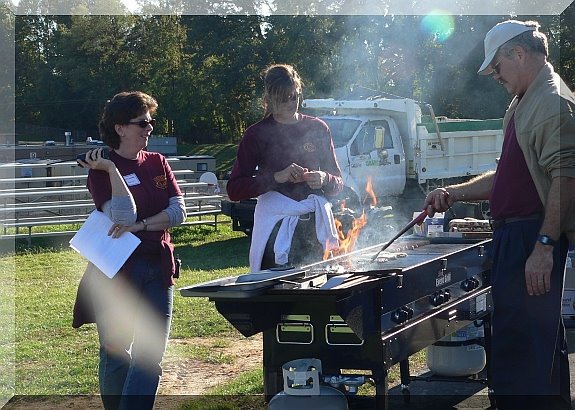
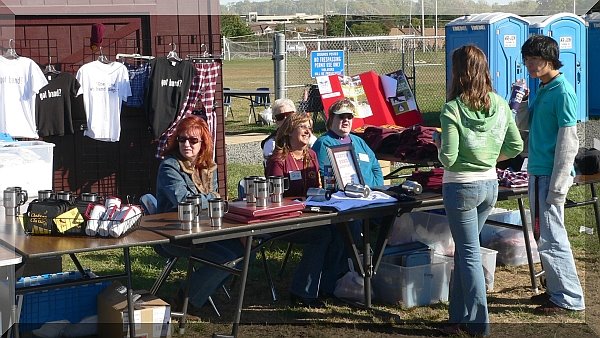
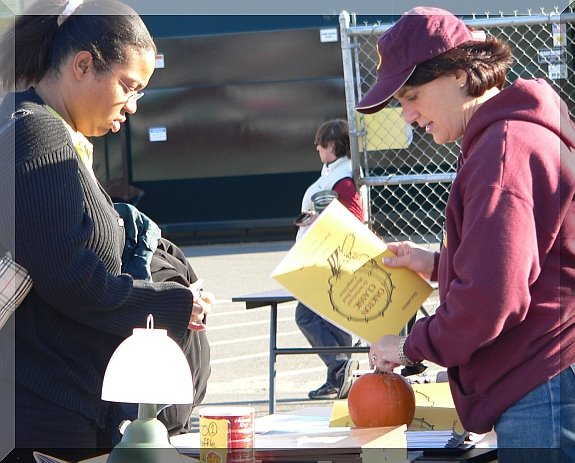
The photos below are from last week's Oakton Classic, sponsored by Joshua's band. As you can see, parents cooked and sold concessions, sold programs, sold shirts, etc. They also did lots of other behind-the-scenes chores to make sure that spectators, competing bands and judges had a good time. They were assisted in all of these efforts by their kids, the band students. I'm constantly humbled by the extraordinary commitment these parents are making to their kids and their education. What a great bunch of people! And the kids are a nice bunch too. It really is lots of fun to work with them.


Yesterday I accompanied the marching band as a chaperone. To Joshua's great relief, I was assigned to bus #2. Since he was on bus #4, he didn't have to put up with my presence on his bus for 6 hours or so (3 hours each way). As you can imagine, 6 hours on a bus, plus an hour lunch break, gave chaperones lots of time to get to know each other. In addition to bus and meal time, parents interacted a lot during the preparation time before and after each show. We loaded and unloaded equipment and instruments onto buses and trucks. We prepared field props. We inspected the students to make sure their uniforms were complete and worn correctly. We hauled props onto and away from the field. We took photos of the kids. And we gabbed. A lot. I think the parents had as much fun as the kids.

Of course, like any other group in the world, 20% of the people do 80% of the work. It's too bad, because the inactive parents don't realize how much they are missing. It's a privilege to be involved in our kids' activities and it's a privilege to know other parents who feel similarly.

I'm a band parent - and I'm proud of it.

Wednesday, October 18, 2006

Ambitious Brew: The Story of American Beer

One of the interesting things about writing book reviews is that I have opportunities to read books I probably never would have read otherwise. Ambitious Brew is one of those books. As you will note from the review posted below, I enjoyed this book quite a lot. In addition to learning a whole lot about beer, I gained insights into the forces that coalesced during the USA's 19th century industrial revolution. I also learned some things about how industries and corporations adapted to the rapid social and cultural changes that occurred throughout the 20th century. Ambitious Brew is more than a book about beer. It is, rather, a book about American culture at large.


******************************

Author: Maureen Ogle
Publisher: Harcourt, Inc.
ISBN: 0-15-101012-9


In the 1830s, few Americans had ever heard of, let alone tasted, beer. At that time, rum and whiskey were the favorite beverages of the American drinking public, with English ale running a distant third. Over the next half-century, however, thousands of enterprising German immigrants transformed American tastes so that, by 1880, beer had decisively supplanted all other liquors as the American national beverage. Ambitious Brew is an engaging account of that transformation.

The fashioning of an industry required the development of numerous technological and commercial innovations. Starting out as small operators that supplied local saloons, early brewers had to devise ways to ensure consistent quality in every batch of beer they made. Upon solving that problem, brewers who expanded their operations had to resolve issues related to the preservation, distribution and packaging of their products. They had to extend the shelf life of beer so that it would be consumable when it arrived at distant destinations. This was accomplished by experimenting with recipes and by using refrigerated railroad cars for shipping. Moreover, reliable transportation and sales networks had to be cultivated. And, to protect their reputations and prevent saloon keepers from diluting their brews, or replacing them with lower quality swill, brewers began shipping large quantities of their beer in labeled bottles rather than kegs. Thus, as the brewing industry expanded, secondary industries grew alongside it.

In the late nineteenth and early twentieth centuries, a growing temperance movement threatened to dismantle the empires of such brewing giants as Anheuser-Busch, Pabst, Schlitz and others. The brewers, aware that taxes on their products accounted for more than one-third of the American government’s revenues, paid little attention to their critics. Their security was shattered in 1913, when Congress ratified the Sixteenth Amendment that established the income tax as a major source of revenue. This amendment, in conjunction with the cumulative successes of the temperance movement over the previous several decades, made conditions favorable for the passage of the Eighteenth Amendment, which prohibited the production, sale and consumption of all alcoholic beverages in the United States. In January 1919, Prohibition became the law of the land.

Prohibition lasted from 1919 until 1933. During that time, some brewers kept their businesses alive by producing soft drinks and “near” (non-alcoholic) beer. Others diversified their companies and produced a variety of goods. Needless to say, most brewers did not survive. Those who did discovered that American culture had changed dramatically in a short fourteen year span. The American public had developed a taste for Coca Cola rather than beer. An entire generation had grown up without ever tasting beer. Thus, in the post-Prohibition era, brewers had to cultivate new images and new markets for their products. These struggles continue to this day, as American liquor consumption is still lower than it was before Prohibition.

The period from the 1930s through the 1960s was a time of consolidation. Many small and medium sized breweries went out of business or were bought out by larger companies. In the latter decades of the twentieth century, this trend toward increased centralization was countered by the home brewing movement and the microbrewing industry. Currently, even though Anheuser-Busch and Miller dominate American brewing (these two companies sell over 50% of all beer consumed in the USA), small and regional brewers are making a comeback. In the early twenty-first century, large and small brewers are learning from each other and rejuvenating the brewing industry. In Ogle’s opinion, an exciting future is open for business to the next generation of innovative brewers.

Carefully researched, filled to the brim with technical information and populated with colorful personalities, Ambitious Brew provides a unique lens through which to examine American culture. Ambitious Brew is more than a story about the indelible imprint German immigrants made on their adopted land. And it is more than a tale of how American consumers prompted those immigrants to adapt traditional products for new palates. Indeed, at its heart, Ambitious Brew is the fascinating story of how distinct cultural features have blended to enrich the fabric of a vibrant society. It is a story that needed to be told, and Ogle has told it very well. Beer aficionados and readers interested in popular culture and history will enjoy Ambitious Brew.

Friday, October 13, 2006

Correction: Summer's End Has Been Postponed!

Earlier today, I wrote that summer is over because our RV is going into winter storage. I was wrong.

My inlaws decided they'd rather visit an outlet mall than put the camper away for the winter. Actually, given the activity selected, I suspect the choice was largely Mom's. :-)

Two recent photos. Signs of the overlap between summer's end and fall's beginning.

Summer is Officially Over

Today, I've learned that summer does not end on a particular day. It ends, rather, with an event: the return of our RV to its winter storage place. Today is the day that Dave and his parents, who are visiting us this week, will put our RV in storage.

It's rather astounding to look back at the summer of 2006 and consider all the things our family did.

Joshua - the highlight of his summer was his two-week trip to Europe. He was busy while he was there, exhausted and exuberant when he got home. The second highlight for him was a week of marching band camp in Orkney Springs, VA.

Jonathan - the highlight of his summer was attending Territorial Music Institutes in Oklahoma and making first chair solo cornet in the TMI Band. Way to go! I think he would say that his second highlight was his vacation week, which he spent as a faculty member at our divisional music conservatory. He works with kids all year, and then when he gets vacation time, he goes to camp and works with another bunch of kids! He must be a Sears!

Dave and me - the highlights of our summer were our vacation times. Even though we've done it several times now, I'm still getting used to the idea of not taking the kids on vacation with us anymore. Dave has made that adjustment more readily than I. Nevertheless, the opportunities to spend quality couple time together were wonderful, especially since Dave has had to make LOTS of business trips in the past six months. During our stays in Maryland, Pennsylvania, West Virginia and Virginia we alternated between relaxing and discovering our passion for whitewater rafting. The whitewater rafting thing is kind of funny. I've watched snowboarders, extreme mountain bikers, ski-jumpers, bungie jumpers, parachutists, etc., and thought: that stuff is far too risky for me! And yet, I love rafting, which is also considered an extreme sport. Dave and I have been gathering information recently about rafting in Colorado, North Carolina, Tennessee and Georgia. We'll see where we go next! I also want to get into kayaking.

Sears Family as a whole - we went camping together over the July 4th and Labor Day holidays. The latter included taking in a double-header in Hagerstown, which was reminiscent of the summers in which we did baseball tour vacations.

Back in the days before we grew thoroughly disgusted with Major League Baseball, we planned some vacations around particular stadiums and teams we wanted to see. Or, if we happened to be in an area, we'd make sure to get to the stadium to see a game. Our family has been to quite a number of Major League stadiums, including the Metrodome in Minneapolis, Kauffman Stadium in Kansas City (my favorite), Coors Field in Denver, Yankee Stadium in New York, Fenway Park in Boston, Toronto's Skydome, Wrigley Field and Comiskey Park, both in Chicago, Busch Stadium in St. Louis, Veterans Stadium in Philadelphia, Detroit's old Tigers Stadium, RFK Stadium in Washington, DC and some others. I won't even start listing the minor league stadiums, as there are far too many of them to count.

Anyway, now that the RV is in mothballs and summer is officially over, I'll shift gears and get into a fall frame of mind. So, here's where I say farewell to the summer and hello to autumn. Bring on those crisp fall days and brilliant colors!

Monday, October 09, 2006

Summer is Almost Over

Summer is almost over in northern Virginia. The weather is getting pleasantly cool and the days are getting shorter. It's getting more difficult to find wildlife outdoors and fall colors are just beginning to appear. Below are some photos I've taken recently.

The first four were taken today with my digital camera. First, a fall rose.

Next, a fall lily.

Next, the mansion that once was occupied by the former owners of the land that now constitutes Green Spring Gardens Park. It is open for tours and tea.

The new gazebo that has been installed in Green Spring's pond area.  I posted two black and white shots of this gazebo a week or two ago.


The following photos were taken with my film camera. I took the two butterfly shots last week. The duck in the middle is from a couple of weeks ago.


Saturday, October 07, 2006

the lost years

This review has not been posted at Bookpleasures yet, as the editor is away for a couple of weeks. Since I think it will be of interest to some of you, I will go ahead and post it now instead of waiting another week or two.
*****************************************************
Authors: Kristina Wandziak & Constance Curry
Publisher: Jeffers Press
ISBN: 0-9777618-1-9


Told from the complementary perspectives of an addict and her mother, The Lost Years is a rich chronicle of drug and alcohol addiction and recovery from those addictions. Kristina Wandziak describes her long, painful slide into addiction, crime and life on the streets. Constance Curry, Kristina’s mother, describes the denial and co-dependence by which she unwittingly, and certainly unwillingly, facilitated her daughter’s addictions. Together, these joint accounts reveal the personal and familial complexities that contribute to and derive from addiction.

To all outward appearances, Kristina Wandziak lived a charmed life. She lived in a beautiful home in a picturesque town near San Francisco. She was intelligent, athletic, pretty and popular. Similarly, Constance Curry appeared to have the perfect home and family. These images of perfection were badly marred, however, by the presence of a verbally abusive, alcoholic husband and father. Behind the closed doors of their lovely home, Kristina, her three siblings and Constance lived in inexorable fear and tension.

Kristina was thirteen years old when she sneaked her first swig of vodka from her parents’ liquor supply. This is Kristina’s account of that first drink:

I lifted the glass to my mouth, and slowly let the liquor slide over my tongue. . . . It was wonderful. . . . I felt incredible. . . . Nothing was ever the same after that night. I had found the secret to life. . . . Increasingly, the desire to drink grew strong in me (p. 9).

Constance noticed her daughter’s odd behavior that night but chose to ignore it because she was busy hosting a party. She tells it this way:

I went downstairs . . . and I noticed Kristina was acting a little funny. But I was wrapped up in the party, so I didn’t dwell on it. . . . I felt a queasiness in my stomach, but . . . I didn’t know how to listen to my gut. I wish I had listened (p. 12).

As the story continues, Kristina describes her physical, emotional, social and psychological decline. When her parents place her in rehabilitation programs, she promptly runs away. She drops out of school and descends into a life of crime to support her habits. At age seventeen, she sees abortion as the only solution to an unwanted pregnancy. Eventually, she ends up living on the streets of San Francisco: homeless, filthy, isolated and filled with self-loathing.

As Kristina declines deeper into addiction, Constance struggles with the effects Kristina’s addictions have on her and her other three children. Constance slowly realizes that she must make two radical changes in her life if she is to save her remaining children from ruin. First, she must divorce her abusive husband. Second, Kristina must not be allowed to have any further contact with the family until she agrees to seek treatment for her addictions. As painful as these decisions are, they ultimately enable Constance, Kristina and the other children in the family to rebuild their lives.

Finally, at age twenty-one, Kristina willingly enters a rehabilitation program and her mother agrees to pay for her treatment. Moreover, Kristina’s mother and siblings attend group therapy sessions in which they and Kristina examine the issues that led to and arose from Kristina’s destructive lifestyle. Kristina’s recovery is long, slow and difficult. She discovers that giving up drugs and alcohol is only a small part of the battle she must fight to build a life. She is mortified when she tries to complete job applications and realizes

I couldn’t get past “name.” I had no address, no phone number, no previous work experience and no education. I could not put down one person as a reference. I felt so lame and helpless (p. 202).

Fortunately, Kristina’s story does not end there. She gets a job and eventually moves into increasingly responsible positions. Now, she runs a successful addictions intervention program. Constance, similarly, has taken the lessons learned from her ordeal and become a specialist and lecturer in the fields of addiction and family recovery.

The Lost Years is a gritty, often grim, account of the horrors of addiction. More importantly, though, it is a book about hope and redemption. Kristina can never relive the years of her youth that she wasted on drugs, alcohol and crime. Constance can never recover the sleepless nights she lost wondering if her daughter was alive, warm or safe. Nevertheless, both of them have moved beyond addiction and its effects, beyond the trials of recovery, to lives of contentment, fulfillment and purpose. That inspirational message is the reason this book should be read by anyone whose life is affected by the tragedy of addiction.

Wednesday, October 04, 2006

Gems #4

FOR BETTER, OR FOR WORSE; IN SICKNESS AND IN HEALTH . . .

The gems I'm writing about today are two officer friends of mine, Betty and Fred Thornhill.

I first met Fred and Betty a little over three years ago when they moved to the Northern Virginia ARC to take up their appointments as chaplains. They are both outgoing, warmhearted people who connect instantly with everyone they meet. Unfortunately, Betty has experienced a string of serious health problems in the past several years. This means that, in addition to his duties as chaplain, Fred has had to assume the role of caregiver for his wife. Both of these roles require intense commitments of time and energy. Still, he never complains about his lot in life. He lives each day in the full joy of God's grace.

Similarly, Betty does not complain about her hardships. If you ask her how she's doing, she'll tell you honestly, but she does so without whining. I've known a number of people with health concerns who talk about nothing else but health, exercise, nutrition, diet, medication. . . . Betty is not one of those. She takes avid interests in many aspects of life. Like Fred, she lives her life in the full joy of God's grace.

In May 2006, Betty experienced total kidney failure. From that time until last week, she was undergoing 3-4 dialysis treatments per week. She no longer has to take dialysis because Fred donated one of his kidneys to her last week. They are both home from the hospital now, recovering from their respective operations. So far, Betty's new kidney is functioning well.

In the three-plus years that I've known Betty and Fred, I've constantly marvelled at the strength of their marriage. When they got married nearly 40 years ago, they never envisioned the medical trials that they would endure. They have taught me what it means to commit one's life to another, "for better, or for worse, in sickness and in health. . . ." I know they've been frustrated by the way in which Betty's health has affected their formal ministry as officers. What they may not realize, however, is that God has created a truly unique avenue of ministry for them. In an era in which many people take marriage and family life for granted, Betty and Fred powerfully model what a God-centered, God-blessed marriage can be. I thank them for the lessons I've learned through their examples and I pray that God will continue to bless their lives and ministries in the days and years ahead.